[New post] Portrait of the Human as a Young Hominin
Fernando Kaskais posted: " How the world looked when we were Australopithecus. BY THOMAS HALLIDAY The swifts arrive with thunder at their backs. Winter birds, they appear, loudly, and in great numbers, pursuing the emerging insect swarms just as the wet season begins aft" WebInvestigator.KK.org - by F. Kaskais
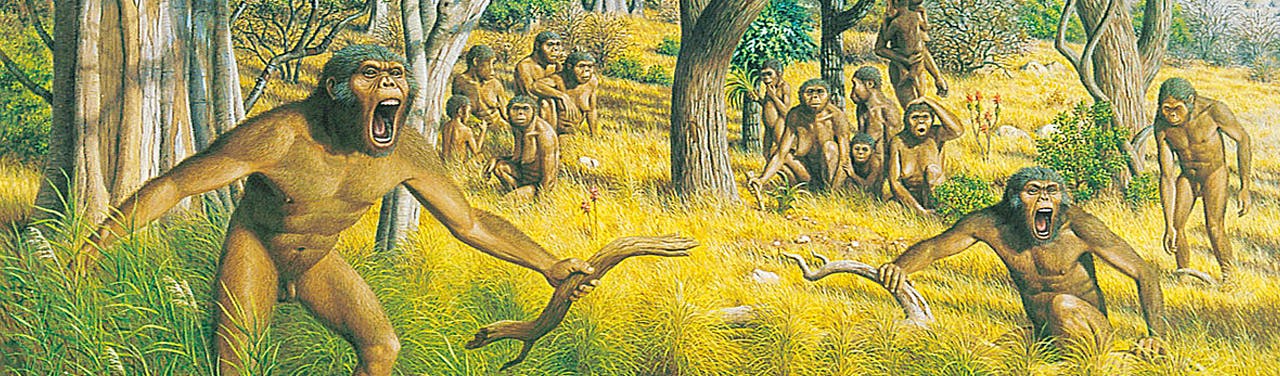
How the world looked when we were Australopithecus.
BY THOMAS HALLIDAY
The swifts arrive with thunder at their backs. Winter birds, they appear, loudly, and in great numbers, pursuing the emerging insect swarms just as the wet season begins after more than four months without rain. The arrival of the migratory birds marks the return of fertility and life, the continuation of a seasonal pattern that will last for millions of years to come.
The birds barrel through the mountain air of the East African highlands that will one day be part of Kenya and Ethiopia. The rise of these highlands, along with that of the Tibetan plateau thousands of miles away, has diverted the winds that once watered northwestern Africa, changing the patterns of rainfall across the region, and beginning the slow decline of the Sahara and Sahel into desert.
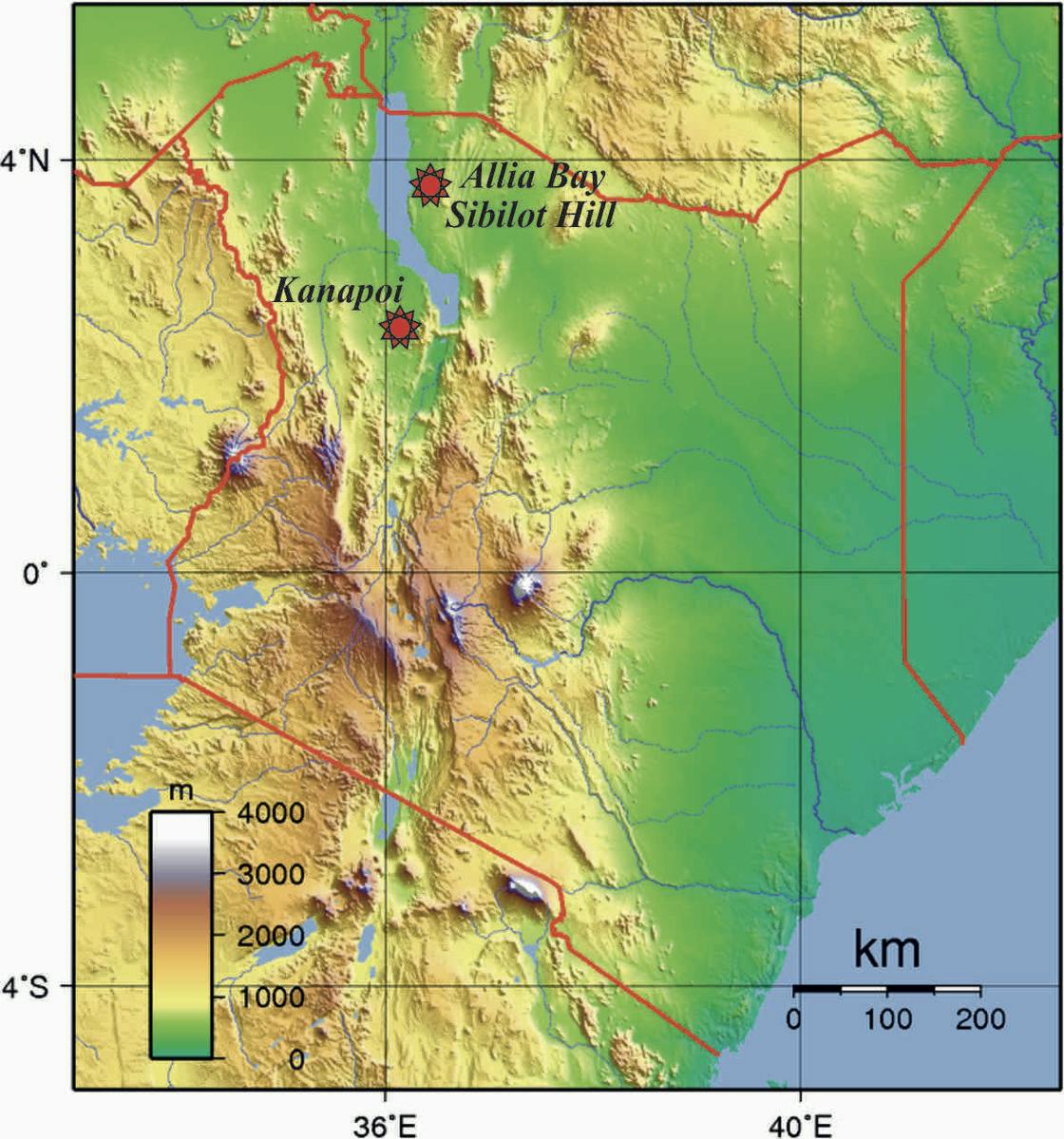
In Kanapoi, an area in what is now northwestern Kenya, Lake Lonyumun is spread wide and shallow, well over 300 kilometers from north to south and some 100 kilometers wide. It fills a vast crack in the continent, the East African Rift. It is fed by rivers that carve through a base of laminated claystones, dense assemblages of mollusk shells, and thick, solidified sandbars, precursors to rivers that will still exist in the modern day—the Omo, the Turkwel, and the wide and gentle Kerio.
HOMELAND: The Kanapoi area in the Kenyan Rift Valley was a dynamic world of diverging continents and seasonal thunderstorms in which the earliest humans emerged. In the Pliocene, on the banks of Lake Lonyumun, lived Australopithecus anamensis, the "southern ape from the lake," perhaps the oldest hominin of all. Paleontologists also uncovered Australopithecus fossils at the sites Allia Bay and Sibilot Hil. Map from Wikimedia Commons.
The rain brings creatures out from hiding. In a fiery flash, a kingfisher breaks the river surface, feathers silvered with sunken air. Rebounding from the splash it has made with a fish in its beak, it flaps downstream to find a place to perch. Shovelnose frogs, fat little things, lumpy-backed and moss-colored, come together to mate, the male climbing on the back of the female as she digs down into the ground away from the river. Mice scamper through the greening grass, wary of the ambush of small carnivores—dwarf mongooses, dark-striped genets, and the earliest Felis, the wild ancestor of the domestic cat.
The low-running sleek of otters slide through the water, and the rain intensifies, as if it will never end. Its splashes form a low-lying fog of spray across Lake Lonyumun. The bull otter Torolutra, as big as a sea otter, and a hunter of fish—catfish, lokel, and the young of the idji—is very much at home in the rippling current. Wherever Torolutra are found, there are also their bigger cousins—bear otters.
With its muscular, flattened tail, an Enhydriodon swimming in the river would seem to be a floating, mossy log until it coils into a gleaming arch and dives. Searching for hard-shelled prey—mollusks, crabs, and the like—there are two species of bear otter in Kanapoi. Both have rounded pestles for teeth and use them to crush the same type of prey. It is believed that the two species can coexist only by dividing up their prey by size—the smaller of the bear otters going after younger individuals and smaller species of shellfish. The larger, E. dikikae, has the dimensions of a modern lion—two meters from whisker to tail and some 200 kilograms in weight.
What distinguishes us from other animals? There was no moment at which humanity suddenly arose.
Beneath the water, half buried in sediment, are round freshwater mussels, Coelatura, and the giant otter is searching for these. The juveniles are too small to concern the otter, but full-grown Coelaturaare up to 6 centimeters long—a nutritious snack even if packaged with a crunch. Enhydriodonare less exclusively aquatic than most of their otter relatives, spending time relaxing on the bank, but still rely on the presence of large bodies of water in which to find their food.
A plunge from a kingfisher hardly causes a splash in the current. It emerges and lands on the back of a giant, silhouetted beast. The metallic blue bird stares at the water, taking advantage of this new fishing platform, which appears to be entirely unconcerned about its new associate. Two and a half meters at the shoulder, it stands cautiously in the muddy shallows, wary of the possible presence of gigantic horned crocodiles. Its short, whorled hair is matted down by the rain, with dark, long-lashed eyes shadowed by two bulbous projections. From the top of its head emerge two more, curving outward and backward to give the impression of an upturned sliver of a crescent moon. Not all giraffids are slender and long-necked; Sivatherium has the stockiness of an ox...




No comments:
Post a Comment