Problem: Central venous line (CVL) placement is a key skill for emergency medicine providers. Sites for central line placement include the internal jugular vein, subclavian vein, and femoral vein. Indications include, but are not limited to fluid resuscitation, medication administration, central venous pressure monitoring, pulmonary artery catheter introduction, and transvenous pacing wire placement. Procedural complications can include catheter-associated infection and arterial puncture. Success rates for CVL placement vary based on location and provider experience [1-3]. Point-of-Care Ultrasound (POCUS) increases both success rate and patient safety when used to guide CVL placement [4].
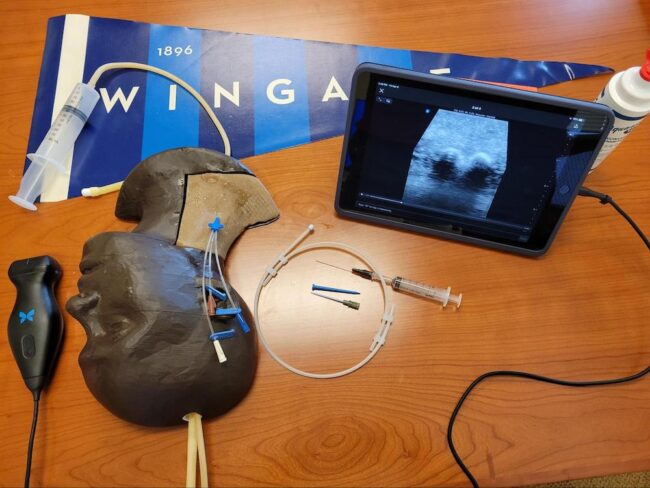
Figure 1. Setup for ultrasound-capable, 3D-printed central line trainer
The Innovation
The ultrasound-capable, 3D-printed central line trainer was created to facilitate realistic training of POCUS-guided CVL placement, specifically utilizing the internal jugular vein. The trainer uses a ballistic gel insert that is ultrasound-capable and replaceable, as needed.
The Learners
The model can be utilized by anyone needing practice and training on central line placement. This includes medical and physician assistant students, residents, and fellows. It will be particularly useful with students familiar with POCUS basics.
Group Size
In our experience, 4-5 students were able to utilize the model before the wear from repeated use began to impact the imaging and structure of the model, necessitating replacement of the insert. The dilation step of the Seldinger technique can be skipped or simulated in order to prolong the life of the gel insert.
Equipment
Description of the Innovation
- The initial head model was designed using 2 common 3D modeling software systems: Tinkercad and Meshmixer
- A generic head and neck model was imported into Meshmixer. Using the available tools in Meshmixer, the head was rotated to the side and the neck was manipulated to enhance the appearance of an extended neck with close attention to the sternocleidomastoid muscle and clavicle.
- The model was then imported into Tinkercad and a section of the neck was removed, inverted, and manipulated inside of a box to create a negative (mold).

Figure 2. Screenshot of head being edited in Tinkercad software

Figure 3. Screenshot of neck mold being edited in Tinkercad software
- The head was printed with Polylactic acid (PLA) filament in 2 sections that were then glued together with superglue. The seam was sealed and smoothed with latex caulk. The files for both the head and the mold can be found in this Google Drive folder.
- A hole was drilled from the base of the neck through the top of the head. A second hole was drilled in the base of the model.
- To make a suitable tray for the ballistic gel insert, a thin plate was printed and then cut to fit the shape of the neck. Finally, that piece was glued to the bottom of the model.
- The model was painted using matte spray paint.

Figure 4. Use of matte spray paint to paint the model
- The mold was printed next. Two holes were drilled on either side to allow for insertion of latex tubing.
- The ballistic gel was heated according to the directions on the box. The gel can be colored using dye or acrylic paint. Caution should be practiced when using acrylic paint. The heated gel can foam up, increasing the possibility of injury from burn.
- While the gel was heating, the mold was prepared. The bottom was coated with a thin layer of dish soap to assist with gel release. Two sections of latex tubing, approximately 2 feet each were inserted into the mold. Modeling clay was used to fill the gaps.
- Once colored and thoroughly heated, the gel was poured into the mold.

Figure 5. Preparation of the mold in which the heated gel will be poured
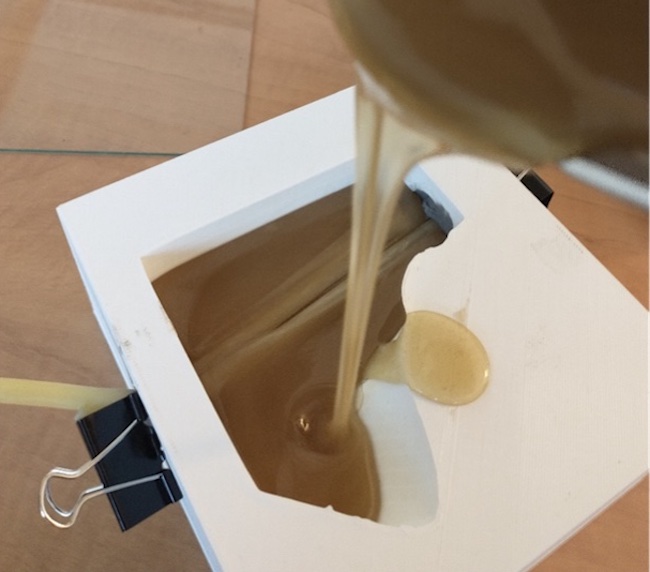
Figure 6. The heated, colored gel is poured into the mold
- After curing, the latex tubes were removed. The gel neck model was then removed and placed into the accompanying space on the 3d printed trainer.
- The latex tubing was fished back through the available holes, and filled with water. As an optional step, a 30 cc syringe was attached to one end of the thicker tube. Tube stoppers can also be printed and used in place of hemostats. Pumping the syringe plunger simulates the appearance of arterial flow on ultrasound.
Video Demonstration of Final Product
Lessons learned
We are currently investigating how best to research this model. The model is inexpensive compared to available commercial CVL trainers. We estimate the cost at approximately $80 per model in materials. This, of course, does not include the price of a 3d printer, 18v drill, or drill bit. Two comparable models available for purchase are both listed for over $1000 [5, 6]. The build time is approximately 1 week with time spent printing, glue-drying, and ballistic gel setting. The model can be used repeatedly and the insert remade many times over.
If another model were to be designed, the top of the head could be sacrificed in favor of an elongated neck section. The top of the head provides no value and consumes 3d printing filament. Furthermore, an elongated neck may be preferable for a new learner by allowing more room to practice probe and hand placement.
Theory behind the innovation
Simulation as a means of teaching has been a firmly established practice across the landscape of medical education. The model in question is high-fidelity and offers the user a realistic experience in a low-stress environment. The model is small enough to be portable and can be used with little preparation, making it an ideal tool for just-in-time training in the emergency department.
Tools that allow the learner to practice multiple steps of a skill during one exercise are invaluable for skill development, competency-based medical education and mastery learning.


Led by series editor, Dr. Mary Haas, the IDEA series showcases examples of what programs worldwide have been doing to make residency conference more entertaining, engaging, and most of all, educational for residents. Read more publications from the series.
References
- McGee DC, Gould MK. Preventing complications of central venous catheterization. New England Journal of Medicine. 2003;348(12):1123-1133. doi:10.1056/nejmra011883
- Schummer W, Köditz JA, Schelenz C, Reinhart K, Sakka SG. Pre-procedure ultrasound increases the success and safety of central venous catheterization. British Journal of Anaesthesia. 2014;113(1):122-129. doi:10.1093/bja/aeu049
- E Portalatin M, Fakhoury E, Brancato R, et al. Factors contributing to unsuccessful central line placement in the neck and chest. Surgery: Current Trends and Innovations. 2019;3(2):1-5. doi:10.24966/scti-7284/100015
- Saugel B, Scheeren TWL, Teboul J-L. Ultrasound-guided central venous catheter placement: A Structured Review and recommendations for Clinical Practice - Critical Care. BioMed Central. Published August 28, 2017. Accessed September 21, 2022.
- Life/form Central Venous Cannulation Simulator. Universal Medical. . Accessed September 21, 2022.
- Blue Phantom internal jugular Central Line Ultrasound manikin. 3012495 - Blue Phantom - BPP-060 - Ultrasound Trainers. Accessed September 21, 2022.


No comments:
Post a Comment