Fernando Kaskais posted: " Wana News Agency / Reuters What I learned about the challenge of resisting a regime that locks up thousands of political prisoners. By Kian Tajbakhsh Amid the nationwide protests that have rocked Iran since the death in police custody of Ma" WebInvestigator.KK.org - by F. Kaskais
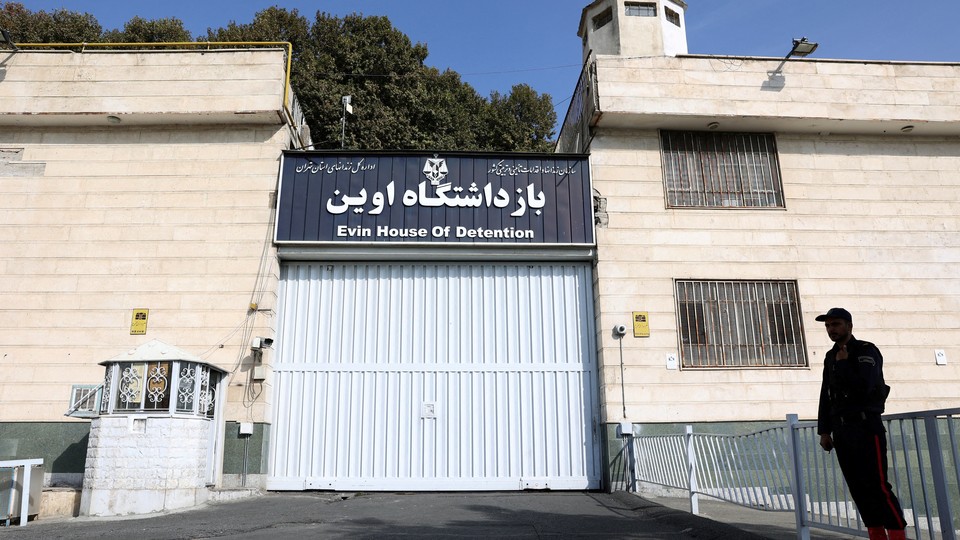
Amid the nationwide protests that have rocked Iran since the death in police custody of Mahsa Amini, who had been arrested for allegedly wearing her hijab improperly, a riot and a fire broke out at Tehran's Evin Prison on October 15. Iran's security services reportedly responded with extreme severity, threatening to shoot prisoners unless they retreated to their cells. According to the authorities, eight prisoners died.
Evin Prison occupies a special place both within the regime's security apparatus and in the political imagination of many Iranians, which is why this disturbance caught people's attention. Although the prison opened a few years before the 1979 revolution that deposed the shah and brought the clerics to power, it has become a symbol of the Islamic Republic's absolutist rule and intolerance of any dissent: Evin is Iran's Bastille.
Whether the fighting and the fire were directly related to the protests is hard to know. On October 23, the Iranian government released footage purporting to show that the fire had been part of an escape attempt in the low-security sections that house the general prison population. Without an independent investigation, this account is impossible to verify. At any rate, to many Iranians, the mere possibility that resistance to the regime had penetrated the prison's walls meant something.
Today, Evin holds an estimated one-quarter of Iran's political prisoners. Thirteen years ago, I was one of them. I was detained in Evin first in 2007, because of my work supporting democratic groups in Iran for George Soros's Open Society Institute, and then again in 2009, because of my participation in the Green Movement protests. In all, I spent more than a year in solitary confinement at Evin.
Media reports rightly call Evin "notorious" or "fearsome." The revolutionary dreams of those who ousted the shah died at Evin after 1979, when the oppressed became the oppressors, and the new regime used the prison as a stage for its sham tribunals and thousands of summary executions. In the decades that followed, the overcrowding was so bad that prisoners had to take turns lying down to sleep. Beatings and intimidation were commonplace. In 1988, toward the end of the Iran-Iraq War, several thousand political prisoners, primarily supporters of the radical-left People's Mojahedin Organization of Iran, also known as MEK, were killed in mass executions. Iran has never signed the United Nations Convention Against Torture.
Regime loyalists have always claimed that they eliminated the most gruesome abuses that took place under the shah. Although Evin has remained open, the authorities closed the shah's older jail in central Tehran and turned it into the Ebrat Museum to showcase the shah's brutality, complete with waxwork figures of torture victims. The regime seemed oblivious to the irony that its own prisons were every bit as cruel.
As a prisoner at Evin, I was forced to participate in televised public recantations. I slept on the bare floor of my tiny cell and was threatened with execution. In 2013, Iran's supreme leader acknowledged that solitary confinement amounted to psychological torture. My experience of confinement, with no legal counsel and limited contact with my wife and baby daughter, was certainly that.
Evin today may not be the nightmarish hellhole it was during the revolution's brutal early years. But its outsize presence in Iran's revolutionary history makes it a reminder of the ways in which Iranian society itself has become a prison that tolerates no dissent from the country's 85 million people. The floggings depicted by the Ebrat Museum's grisly effigies have not been banned—they occur outside the prison, in public punishments for such infringements as improperly wearing a hijab, mixed-gender socializing, and drinking alcohol.
Iam not sure what prompted a joke I made to reporters during my first confinement at Evin. I had been en route to an interrogation session when I was diverted and told to take off my blindfold. The prison warden introduced himself and asked how I was, as if we had met in a park and were exchanging pleasantries. "Okay," I said warily, noticing the contrast between my prison clothes and his formal suit. Then he said, "It so happens that a group of international reporters are visiting Evin just now, and they would like to ask some questions about the conditions here." Obviously, this was a setup; I had no choice but to play along in the charade...




No comments:
Post a Comment