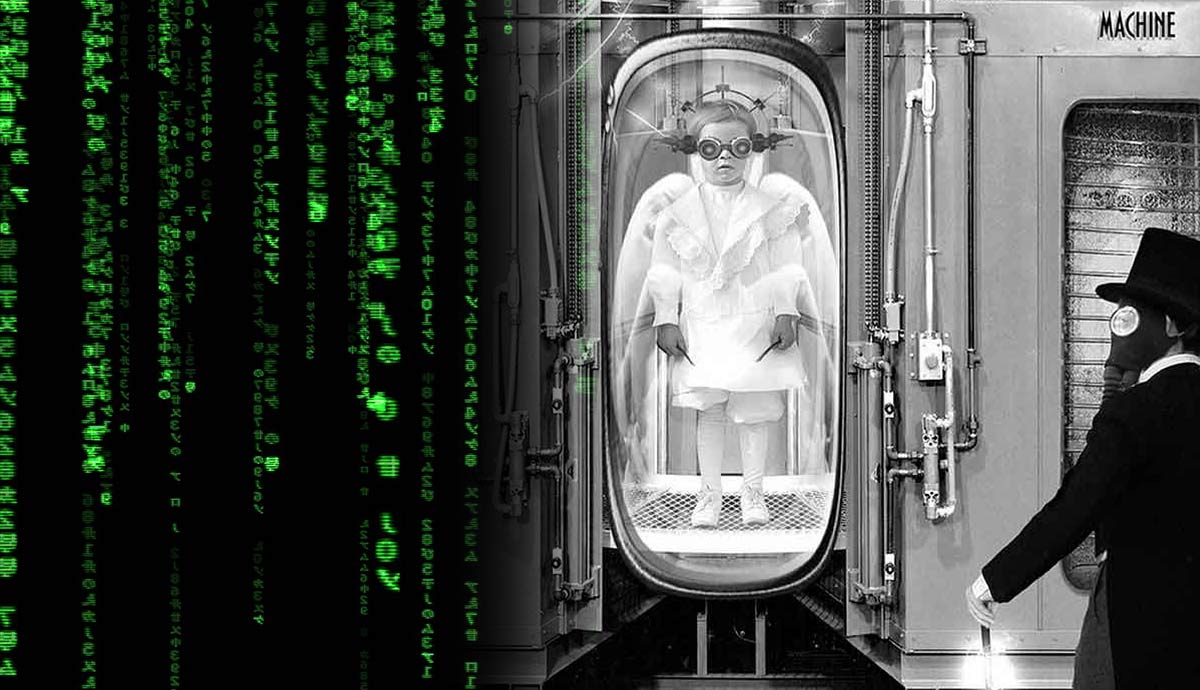
Robert Nozick's thought experiment — the Experience Machine — explores what value would be lost if we lived in a simulation.
By Joseph T F Roberts, PhD Political Philosophy
If you could live the perfect life in the metaverse, but it meant leaving your current life behind, would you do it? In this article, we look at Robert Nozick's 'Experience Machine' thought experiment in Anarchy, State, and Utopia, and consider what we would lose by living a virtual life.
Robert Nozick's Thought Experiment: What if We Lived in a Simulation?

GLMatrix by Jamie Zawinski, 2003, Screenshot of the GLMatrix screensaver by Church of emacs, 2008, via Wikimedia Commons.
No one's life is perfect. Sure, if you spend enough time following certain people on Instagram, it can seem some people's lives are perfect, but they probably have lots to complain about, too. Perhaps their hair stylist doesn't always turn up on time, or their business class seats still provide inadequate legroom. Even billionaire influencers and oligarchs can't always get what they want, even though they definitely have what they need.
What if we could make life perfect? What if, through some form of new technology, we could create a perfect life?
In the 1999 film The Matrix, the character Neo (played by Keanu Reeves) discovers that he has been living in a simulation. In the movie, Neo is offered a choice: take the red pill and discover what lies outside the simulation, or take the blue pill and remain in the contented state of never discovering what reality is truly like. Which option would you take? How should one make the decision?
Robert Nozick's Experience Machine
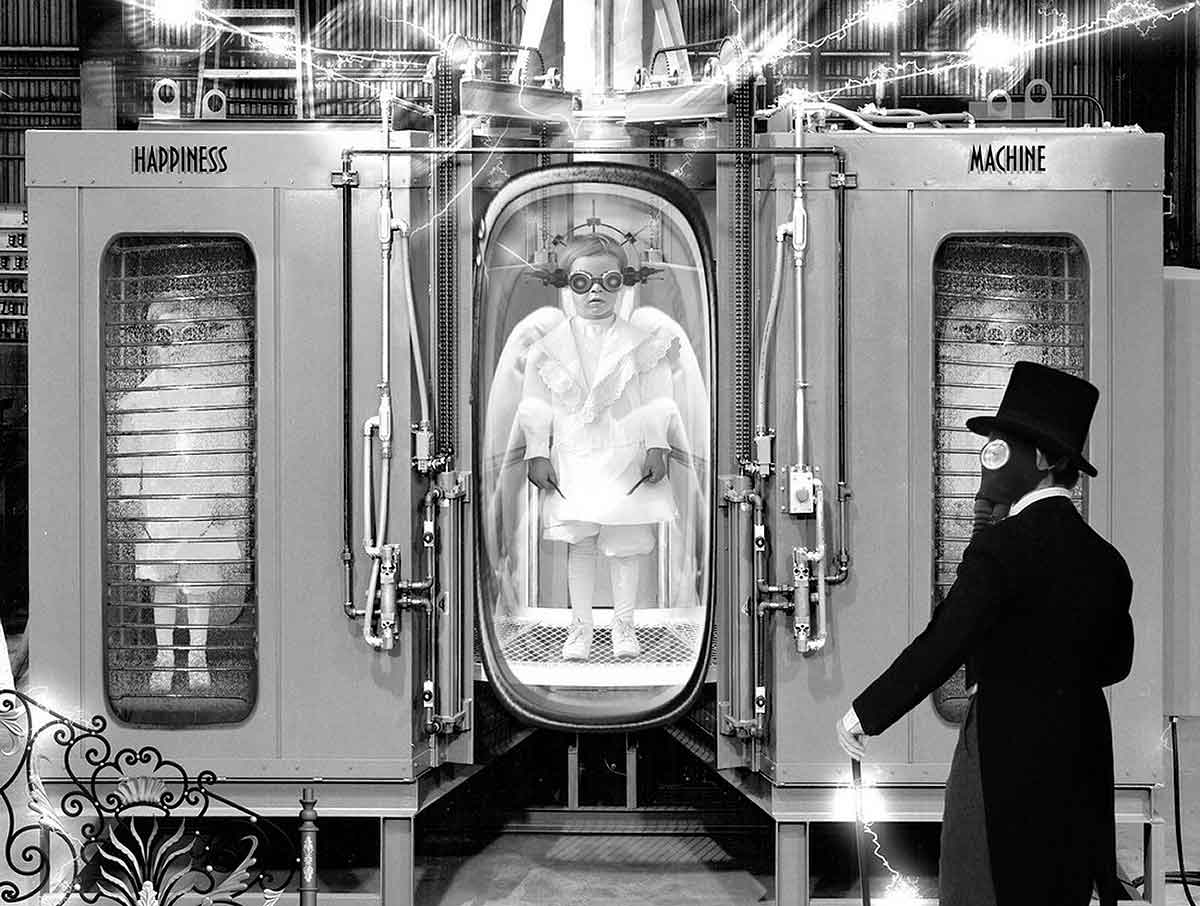
The Experience Machine by Yescela Vorazan, via matrise.no:
Given how canonical Robert Nozick's example of the experience machine has become in ethical theorizing and philosophy more generally, it is worth quoting Nozick's version of the thought experiment in full:
"Suppose there were an experience machine that would give you any experience that you desired. Superduper neuropsychologists could stimulate your brain so that you would think and feel you were writing a great novel, or making a friend, or reading an interesting book. All the time you would be floating in a tank, with electrodes attached to your brain. Should you plug into this machine for life, preprogramming your life's experiences?
If you are worried about missing out on desirable experiences, we can suppose that business enterprises have researched thoroughly the lives of many others. You can pick and choose from their large library or smorgasbord of such experiences, selecting your life's experiences for, say, the next two years. After two years have passed, you will have ten minutes or ten hours out of the tank, to select the experiences of your next two years.
Of course, while in the tank you won't know that you're there; you'll think it's all actually happening. Others can also plug in to have the experiences they want, so there's no need to stay unplugged to serve them. (Ignore problems such as who will service the machines if everyone plugs in.) Would you plug in? What else can matter to us, other than how our lives feel from the inside? Nor should you refrain because of the few moments of distress between the moment you've decided and the moment you're plugged. What's a few moments of distress compared to a lifetime of bliss (if that's what you choose), and why feel any distress at all if your decision is the best one?"
(Nozick, 1974, p. 43)

Photograph of Robert Nozick by Libertarian Review, 1977, via Wikimedia Commons.
The question Nozick develops this thought experiment to answer is whether there is anything that matters beyond what a particular experience feels like. If the only thing that matters is how our lives feel from the inside, it seems foolish not to plug into the experience machine. After all, one could guarantee the best possible internal experience; we could all make our individual lives perfect from our point of view. Granted, that will be different for everyone. Some people might actually enjoy the biting cold experienced whilst climbing Everest. Others could choose a more sedate life, lying on a beach in the Bahamas, piña-colada in hand. If you get an opportunity to get what you want, why wouldn't you take it?
Experience Isn't Everything

Photo of Mount Everest by Zippy Monkey, via Wikimedia Commons.
Nozick suggests a few reasons against plugging into the experience machine. The first reason Nozick gives is that we don't just want to have the experience of doing something. We want to actually do it, in the real world. Pilots want to fly planes, not sit in simulators. We want to drink the piña colada, not feel like we've drunk it. Given that the experience machine doesn't allow us to actually do whatever it is we want to do, we have a reason not to plug into it.
A second reason for not plugging in is that, in addition to having pleasant experiences, we also want to be a certain way, be a certain kind of person. Once plugged into the experience machine, Nozick argues, we wouldn't be able to be kind, or witty, or intelligent. We simply wouldn't have a character. Living, Nozick suggests, is not something that the machine can do for us. Therefore, we shouldn't plug ourselves into the experience machine...
more...
https://www.thecollector.com/robert-nozick-experience-machine/

F. Kaskais Web Guru



No comments:
Post a Comment