Droperidol is back! Routine use of calcium for cardiac arrest is out? TPA is... well, we won't go there. The landscape of medicine is continuously being reshaped. New research may question the effectiveness of an existing medication or promote the arrival of a novel treatment. Once beloved medications sit dust-laden in the back of a hospital pharmacy. But sometimes, just sometimes, an old medicine arises from that dust. Phenobarbital for alcohol withdrawal comes to mind.
Could cocaine hydrochloride be one of those medications to be resurrected?
Cocaine is effective in the treatment of epistaxis. Epistaxis is an exceedingly common complaint, accounting for approximately one in 200 emergency department (ED) visits in the United States [1, 2]. If you ask any seasoned emergency physician their ideal approach to epistaxis management, chances are high that it used to include cocaine. They will exclaim how superior it was to anything used today and claim, "Not only did it vasoconstrict, but it anesthetized, as well!" If this is the case, why is cocaine hydrochloride no longer used?
This post will chronicle cocaine's fascinating yet troubled history in medicine and expose you to another tool for your arsenal in the ED management of epistaxis.
History
The coca plant, native to South America, Mexico, Indonesia, and the West Indies, derives its name from the Aymaran word Khoka meaning "the tree" [3]. Coca leaves contain approximately 0.25 to 0.9% cocaine. Their use medicinally dates as far back as 1000 BC by the indigenous people of South America. The leaves were chewed for energy supplementation and altitude sickness relief. During the Incan Empire of the 13th to 16th century, the leaves were revered as sacred and served as a panacea or cure-all. Coca was used to aid in digestion, pain relief, mitigation of hunger, wound healing, and even as a local anesthetic for invasive procedures, such as cranial trephination [3, 4].
It was not until the mid-1800s that cocaine's journey began in Europe with the German chemist, Albert Nieman. Neiman isolated the alkaloid cocaine from the coca leaf and noted its numbing properties when placed on the tongue [5]. Its anesthetic and vasoconstricting properties were soon recognized by Austrian Professor C.D. Schroff and Peruvian physician, Dr. Thomas Mareno y Maiz [4]. Its popularity in medicine, however, had yet to catch on [4–6].
1884 marked a pivotal year for cocaine use in medicine. Austrian ophthalmologist, Dr. Carl Koller, introduced cocaine as a local anesthetic for cataract and other eye surgeries, which was a groundbreaking advancement. He additionally suggested its use for additional procedures of the nose, pharynx, and larynx [4, 5, 7]. Simultaneously, Sigmund Freud, the famed Austrian neurologist, became fascinated with cocaine's various applications and wrote Uber Coca, the first of his 5 papers on the subject. He touted it as a "magical substance" without addictive properties. Ironically - and unfortunately - Freud later realized his misjudgment and spent years grappling with cocaine addiction [4, 5, 7].
Cocaine's use as a local and regional anesthetic spread widely across Europe and to America from there. Influential American surgeons like Dr. William Halstead, a founder of Johns Hopkins School of Medicine, and his student, Dr. James Corning, further advanced its clinical applications by using cocaine as the first agent for regional nerve blocks and spinal anesthesia [8]. Like Freud, Dr. Halsted became addicted to cocaine and later morphine, which he used to wean his cocaine addiction.
In the early 1900s the medical use of cocaine declined due to increased reports of side effects, the development of safer alternatives such as procaine, and strict regulatory measures such as the 1914 Harrison Narcotics Tax Act [9].
Today's Use in Medicine
Most of today's medical use of cocaine is by the Ear, Nose and Throat (ENT) community. In fact, the American Academy of Otolaryngology-Head and Neck Surgery has had a position statement on cocaine since 1886 that reads [10]:
The American Academy of Otolaryngology-Head and Neck Surgery considers cocaine to be a valuable anesthetic and vasoconstricting agent when used as part of the treatment of a patient by a physician. No other single drug combines the anesthetic and vasoconstricting properties of cocaine.
FDA Approval
Cocaine hydrochloride is FDA-approved for local anesthesia for adult nasal procedures. Though not FDA-approved, it is also commonly used by ENT physicians as a hemostatic agent to prevent post-procedure bleeding and as a decongestant to promote a clearer view of the nasal passageways during surgery [11–14]. In the ED, it has been used off-label to treat epistaxis [11, 13, 15, 16] and as an anesthetic and analgesic before fiberoptic nasotracheal intubation [8].
Mechanism of Action
Cocaine is an alkaloid ester with weak basic properties. The addition of hydrochloride salt forms cocaine hydrochloride. In this form, cocaine is soluble in aqueous solution and can be used for ENT procedures. Its anesthetic properties occur via blockage of voltage-gated sodium channels. Vasoconstriction and hemostasis occur due to inhibition of catecholamine reuptake, including norepinephrine [9, 11].
Pharmacokinetics
- Intranasal absorption: 4-33% [17–19]
- Onset: 2-5 minutes [8]
- Duration: 30-45 minutes [8]
Preparations
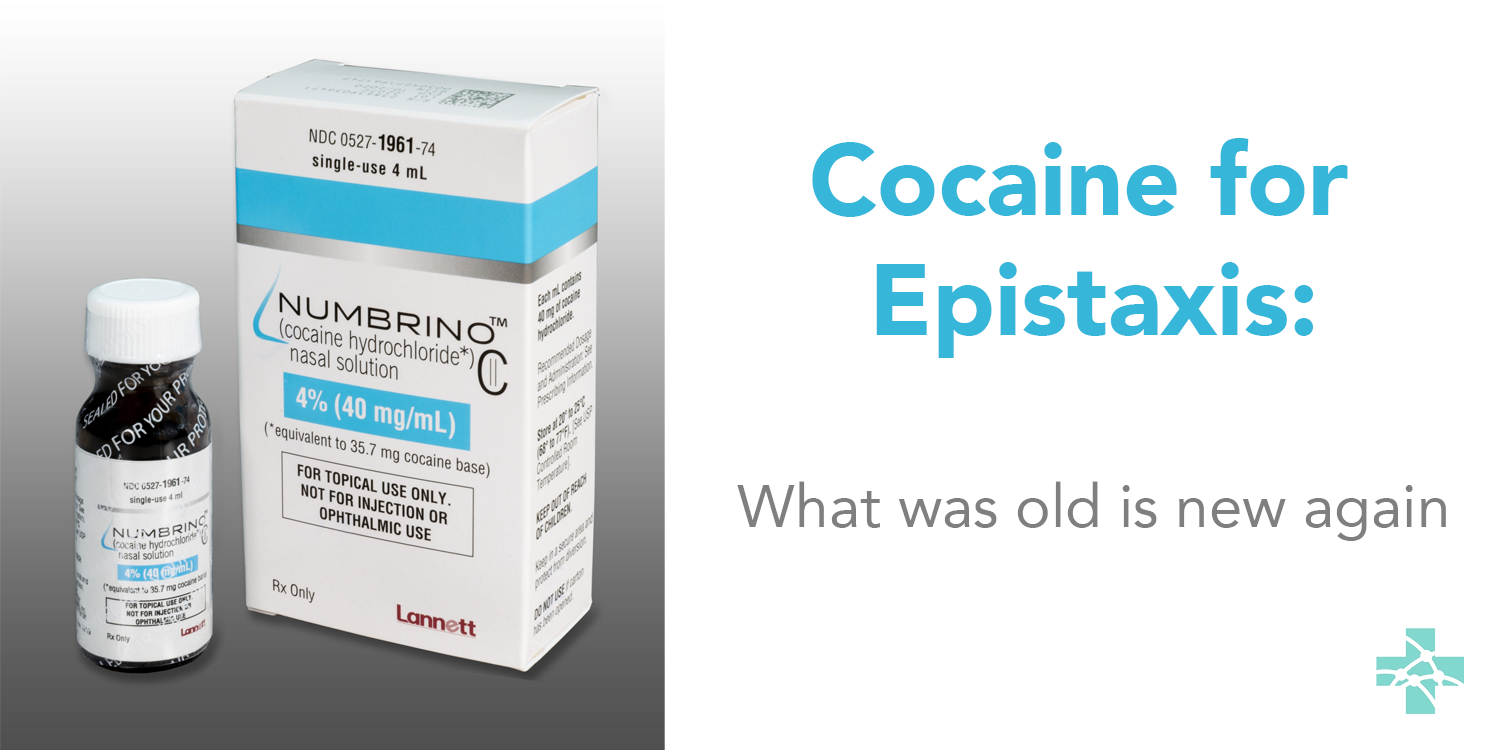
Cocaine hydrochloride is a clear, green solution. It comes in a single-unit bottle with concentrations ranging from 4-10%. Only the 4% solution is currently recommended as it has similar efficacy to higher concentrations with fewer side effects [11, 22]. The 10% solution should be avoided as it has been associated with toxicity and adverse events [8, 17, 20, 23]. Typically the 4% solution is dispensed in 1 mL or 4 mL single-use bottles.
Efficacy
There is limited research available on the use of intranasal cocaine in the ED for epistaxis management, or any other condition. Studies from the ENT literature have shown that cocaine has similar efficacy to most vasoconstrictors including epinephrine and phenylephrine for preventing bleeding after intranasal procedures [26–30]. The literature is mixed on oxymetazoline (Afrin) in epistaxis with some studies showing it may have superior efficacy in preventing post-procedure epistaxis [31, 32]. However, oxymetazoline lacks any anesthetic properties.
Safety
Concerns about cocaine hydrochloride's intranasal use primarily revolve around its potential for systemic cardiovascular toxicity. Historical case reports of varying quality have documented significant adverse events including myocardial infarction (MI) and cardiac arrhythmias following intranasal use during ENT procedures and epistaxis management [21, 33, 34]. A dive into these reports, however, shows that a concentration and dose over the accepted 4% concentration and 200 mg maximum dose was frequently used in these cases. Many confounders also existed, such as a history of cardiac disease and concomitant medication administration (including general anesthesia) [34, 35]. There have been many contemporary studies comparing cocaine to other vasoconstricting/anesthetic agents in the ENT literature. In these studies, cocaine has not been shown to cause serious adverse CNS or cardiac events including MI, dangerous arrhythmias, or death [28, 32, 36–41].
It is important to note that most of the randomized control studies excluded patients with cardiac disease. It is therefore recommended to avoid the use of cocaine in patients with a history of MI, CAD, congenital heart disease, or uncontrolled hypertension [18, 34]. Cocaine should also be avoided in patients on beta-blocker therapy, from limited studies demonstrating increased coronary vasoconstriction with concomitant administration [20, 42].
Side Effects
The most common side effects are mild blood pressure elevation, mild tachycardia, non-emergent headache, and anxiety [18, 43]. Although rare, signs to watch for that could indicate severe CNS or cardiovascular toxicity include: agitation, seizure activity, hyperthermia, significant hypertension, significant tachycardia or arrhythmias, chest pain, and MI [25, 34].
It is recommended that patients receiving intranasal cocaine should have continuous cardiac monitoring and frequent vital sign checks, assessing for hypertension and tachycardia [21].
Contraindications [11, 24, 25]
Absolute
- History of allergy to cocaine or substitutes of topical solution
Relative
- History of cardiovascular disease (uncontrolled hypertension, unstable angina, MI, coronary artery disease, congestive heart disease, congenital heart disease): Increased risk of cardiac adverse event
- Seizure/epilepsy history: May decrease seizure threshold
- Active asthma exacerbation: May cause bronchoconstriction
- Drug interactions:
- Beta-blockers: May lead to hypertensive crisis through unopposed alpha-adrenergic vasoconstriction
- Lidocaine/category 1A & 1C antiarrhythmics: Concurrent sodium channel blockade
- Epinephrine or phenylephrine: Historical reports of MI and ventricular arrhythmia
- Succinylcholine: Co-metabolism by plasma cholinesterase may lead to increased toxicity
- Selective Serotonin Reuptake Inhibitors (SSRIs): Increased risk of seizures
- Monoamine Oxidase Inhibitors (MAOIs): Prevent breakdown of catecholamines and can lead to toxicity
- Disulfiram: Increases plasma cocaine and could lead to toxicity
Special Populations
- Pregnancy: Category C (may cause fetal harm). Avoid use during pregnancy [24, 25].
- Lactation: Avoid use during lactation [25].
- Pediatric: Not well studied
Barriers to Use
- Regulations
- Schedule II drug (high potential for abuse with potentially severe psychological or physical dependence)
- Requires storage in a locked cabinet and maintenance of separate written records of use
- Time to treatment: May take longer to obtain from the pharmacy compared to alternatives, given storage considerations and whether dispensed from the hospital (rather than ED) pharmacy
- Drug testing: Discuss with patients before use that cocaine may be detected up to 1 week in blood and even longer in urine [25].
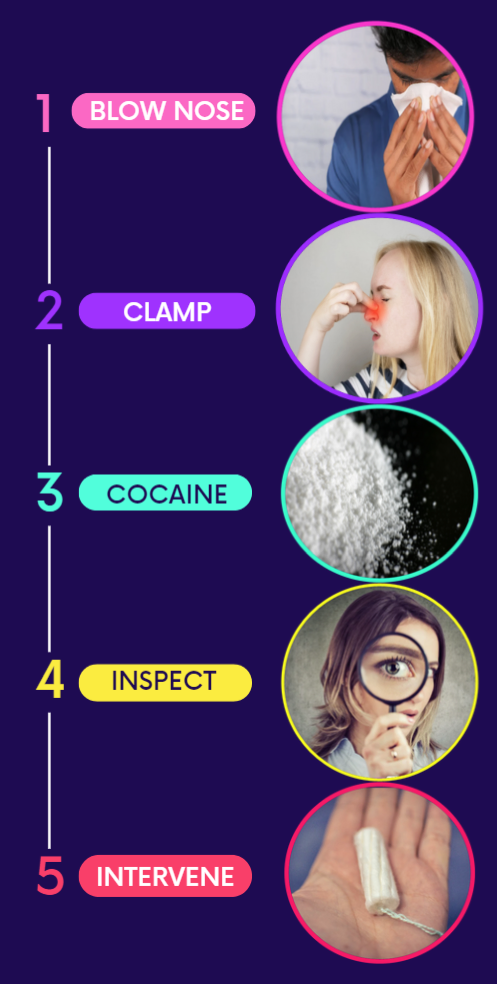
Proposed ED Epistaxis Algorithm [16, 44]
Takeaways
- In the right patient, cocaine may have a place in the management of epistaxis. Avoid in patients with cardiovascular disease.
- Cocaine is the only single agent that both vasoconstricts and anesthetizes.
- Insert 1-2 pledgets soaked each with 40 mg of cocaine hydrochloride into the affected nare for 20 minutes.
- The maximum dose is 2 mg/kg or 200 mg, whichever is lower.
Read More


No comments:
Post a Comment