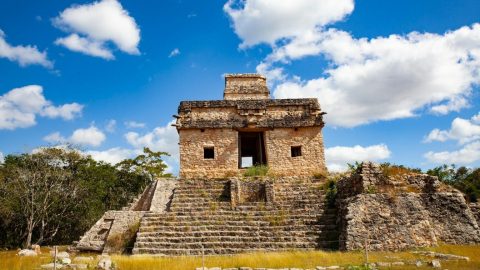
Alfonso Betancourt / Unsplash
How (not) to end up in the ash heap of history.
KEY TAKEAWAYS
- This essay was first published on Eli Dourado's Substack. Eli is the Chief Economist at the Abundance Institute, with which Freethink maintains a partnership. You can read the original article here.
By Eli Dourado
A society does not ever die 'from natural causes,' but always dies from suicide or murder—and nearly always from the former." — D. C. Somervell. 1
Àpropos of nothing, I have found myself wondering recently what it would be like to live through a collapse. Would I see it coming? What would be the signs?
A number of times in human history, a society has gone from a relatively high level of sociopolitical complexity to a much lower one—rapidly, within the span of a few decades. This is what we will call collapse. Collapse manifests as a lower degree of social differentiation and economic specialization, less centralized control, less behavioral control, less investment in art and monuments, a lower flow of information within society, less sharing and trading of resources, a lower degree of social coordination and organization, and territorially smaller political units. And a lot of people probably starve, if they don't meet more violent ends.
Collapse is a fate that befell at least the Western Zhou empire; the Harappan civilization of the Indus Valley; medieval Mesopotamia in parts of the Abbasid caliphate, including the Anarchy at Samarra; the Egyptian Old Kingdom; the Hittites; the Minoans; the Mycenaeans; the Western Roman empire; the Olmecs; the Lowland Classic Maya; Teotihuacan, Monte Albán, and Tula in the Mesoamerican highlands; Casas Grandes in northern Mexico; the Chacoans in what is today New Mexico; the Hohokam in southern Arizona; the Eastern Woodlands civilization, including the Mississippians centered on Cahokia in today's East St. Louis; the Huari and Tiahuanaco in Peru; the Kachin of highland Myanmar, who oscillated between complex and egalitarian social forms as described by James C. Scott; and the Ik of northern Uganda, who have simplified society to such an extent that they allegedly reject familial bonds, although this has been disputed.
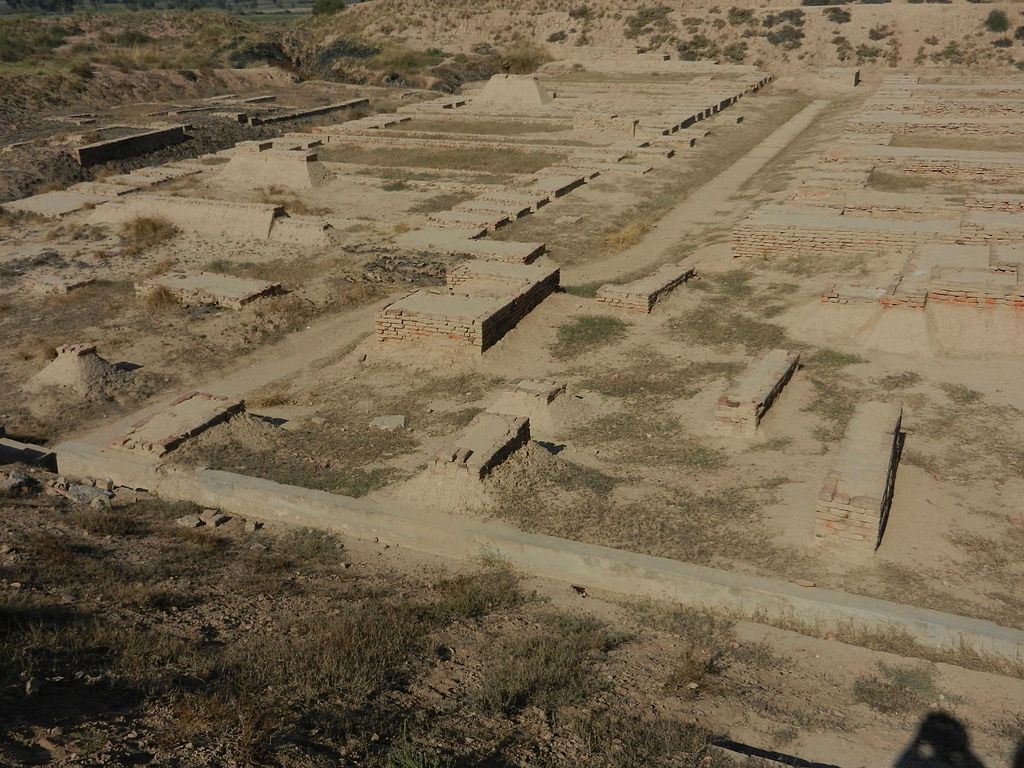
Granary and Great Hall, Mound F in Harappa. (Photo by Muhammad Bin Naveed)
Collapse has happened often enough that it is not likely to be a series of flukes, but a general feature of human social organization. Not every society eventually suddenly collapses; it may be the case that when one does it is because some particular conditions obtain. What are those conditions? Can we come up with a general explanation? And while the subject is interesting as a pure matter of social science, we all want to know: could it happen here?
The GOAT on the topic of collapse is archeologist Joseph Tainter. His 1988 book The Collapse of Complex Societies weaves together historical and prehistorical fact, an insistence on explaining the cross-sectional variation, rigorous theorizing including an embrace of marginal analysis, and generally great social scientific judgment.2 It is a tour de force. If you want to understand why it has lived rent-free in my head for the last few months, as several friends can attest, read on.
Why complexity?
If we're going to understand why societies sometimes spontaneously simplify, we must first have a solid theory about why they become complex in the first place. In both a historical and analytical sense, simple human societies arise first. These simple societies are highly egalitarian and non-hierarchical. Why do they move toward greater hierarchy, stratification, inequality, and complexity?
There are broadly two views on this question. One view is dominated by class conflict. The state reflects domination and exploitation based on divided interests. A ruling class coercively subjugates the population out of greed and selfishness. Marxists are not the only exponents of this view, but they are perhaps the most vehement, viewing society as sharply divided between workers who engage in social production and elites who appropriate the output. Of course, subjugation of subpopulations happens—American slavery is a gruesome example. The pure class conflict view is that subjugation explains the entirety of society, which is composed of ruling elites and subject populations.3
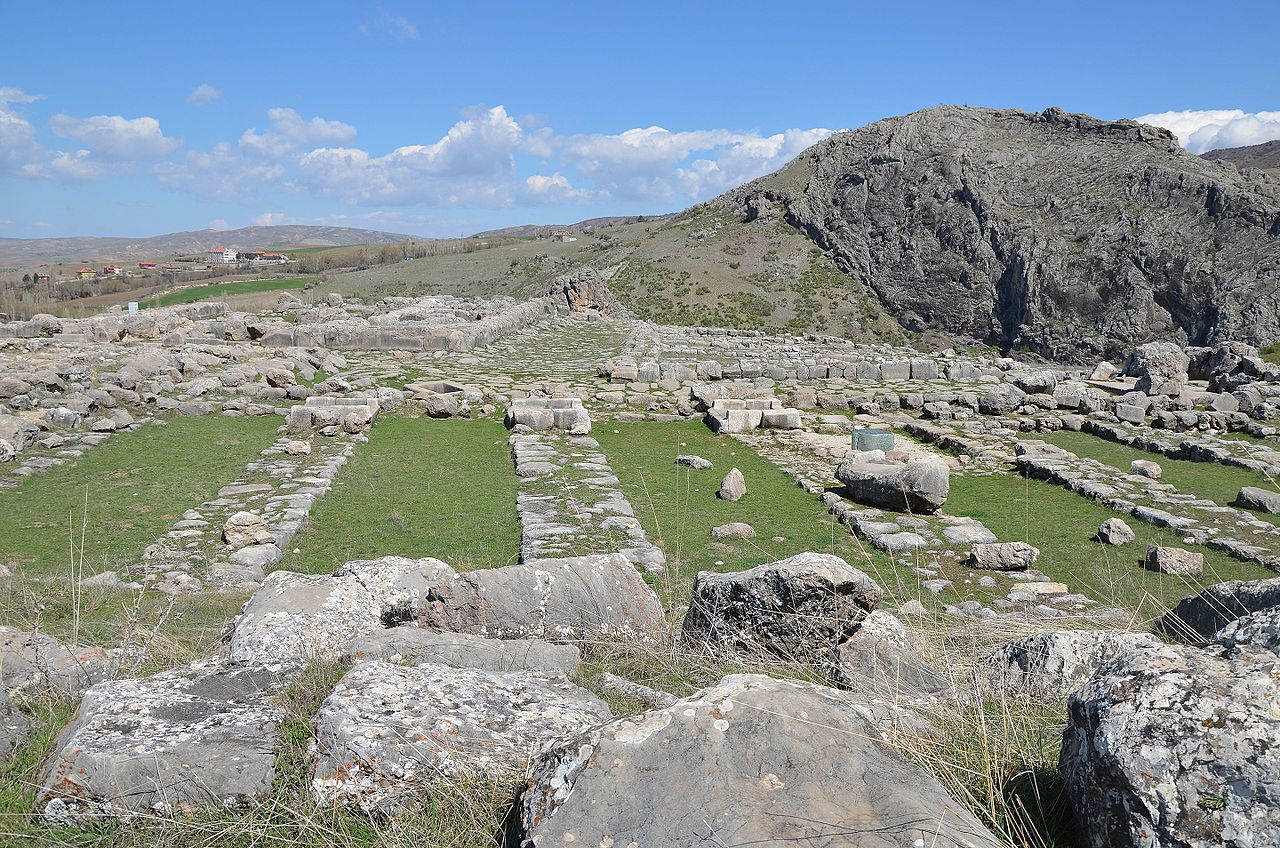
The Great Temple and surrounding storerooms, Hattusa, capital of the Hittite empire. (Photo by Carole Raddato
At the other end of the spectrum are integrationist or functionalist views, which are based on shared interests between members of society. Even an egalitarian society is going to face problems, and many of these problems are most readily addressed by creating some form of hierarchy and social division of labor. For example, limited water resources may require the creation and maintenance of an irrigation system, including the need to mobilize and direct labor. The threat of invasion may require the establishment of military defense, including a command and control system. In general, society faces some problem, which requires the creation of public goods, which requires the creation of administrators, who are rewarded for realizing the benefits of centralization. Complexity solves social problems and serves population-wide needs.
Tainter adopts a moderate position, one that leans integrationist but also includes a role for class conflict. Complexity in society does exist to solve problems and provide benefits to the populace. And yet, "compensation of elites does not always match their contribution to society, and throughout their history, elites have probably been overcompensated relative to performance more often than the reverse." Public choice considerations mean that even if complexity arises to solve broad-based social problems, the ultimate distribution of the benefits can be influenced by greed and power...
more...
https://bigthink.com/the-past/sociopolitical-collapse/

F. Kaskais Web Guru




No comments:
Post a Comment